


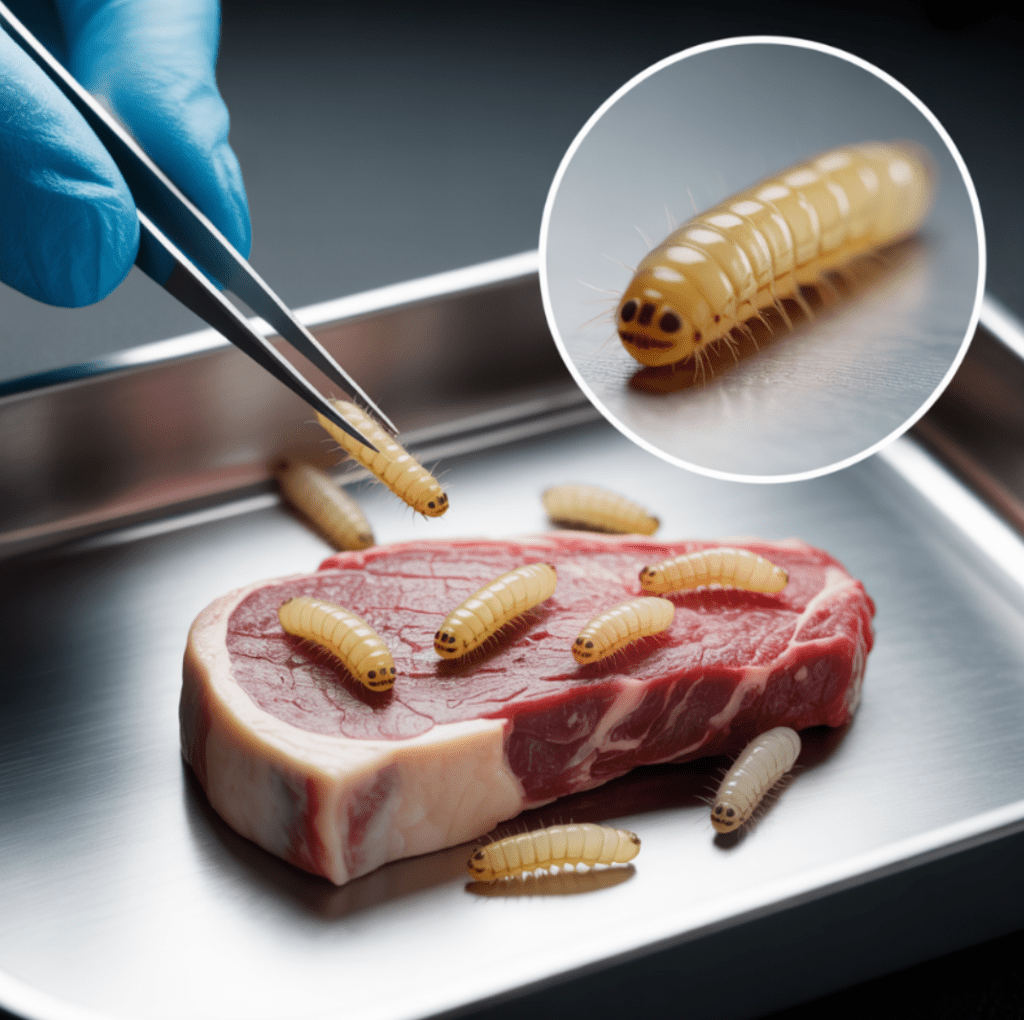
First Human Case of Flesh-Eating Screwworm in the U.S. – What Every Family Needs to Know
Health officials confirm the first human infection with Cochliomyia hominivorax, the flesh-eating screwworm parasite. Here’s how to spot it, treat it, and prevent it.
What Is Screwworm?
Cochliomyia hominivorax is a parasitic fly whose larvae (maggots) burrow into living tissue. Unlike common maggots that feed on dead tissue, screwworm larvae digest healthy flesh, creating deep, foul-smelling wounds.
Symptoms & Detection
- Early: Painful, swollen wound with clear drainage.
- Advanced: Visible larvae, foul odor, fever.
- Where: Most often in open cuts, surgical sites, or ear/nose.
- Travel Link: Recent travel to Central/South America or Caribbean.
Treatment & First Aid
- Seek Medical Care Immediately – DO NOT remove larvae yourself.
- Diagnosis: Physical exam + travel history.
- Removal: Surgical extraction by healthcare professionals.
- Aftercare: Antibiotics and wound debridement.
Prevention Tips
- Cover open wounds with sterile bandages outdoors.
- Use insect repellent containing DEET in endemic areas.
- Inspect pets daily for wounds after travel.
US Eruption Timeline
| Year | Event |
|---|---|
| 1950s | Eradication program ends US outbreak |
| 2016 | First US livestock cases since 1966 |
| 2024 | First confirmed human case |
FAQ
Is it contagious?
No. You cannot “catch” screwworm from another person.
Can pets get it?
Yes. Check animal wounds daily and consult a vet immediately.
Is the vaccine available?
No human vaccine; prevention is key.
Know someone traveling? Share this article and bookmark @01easylife for updates.